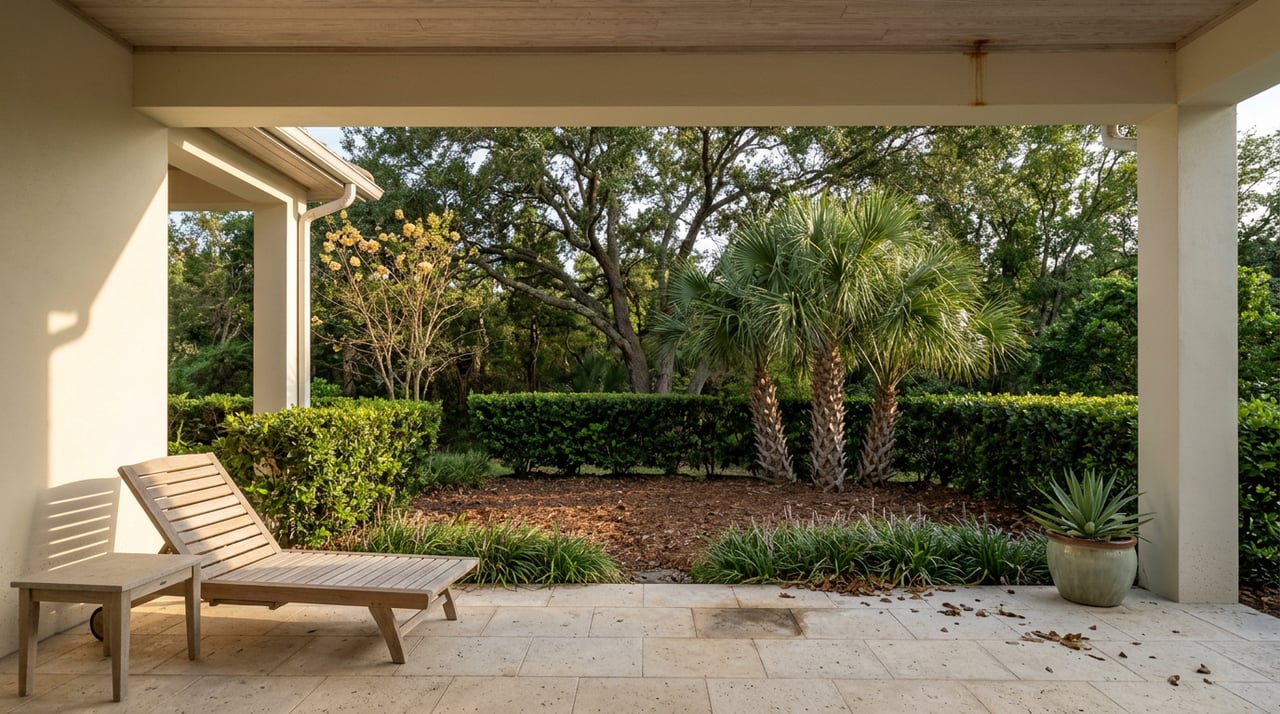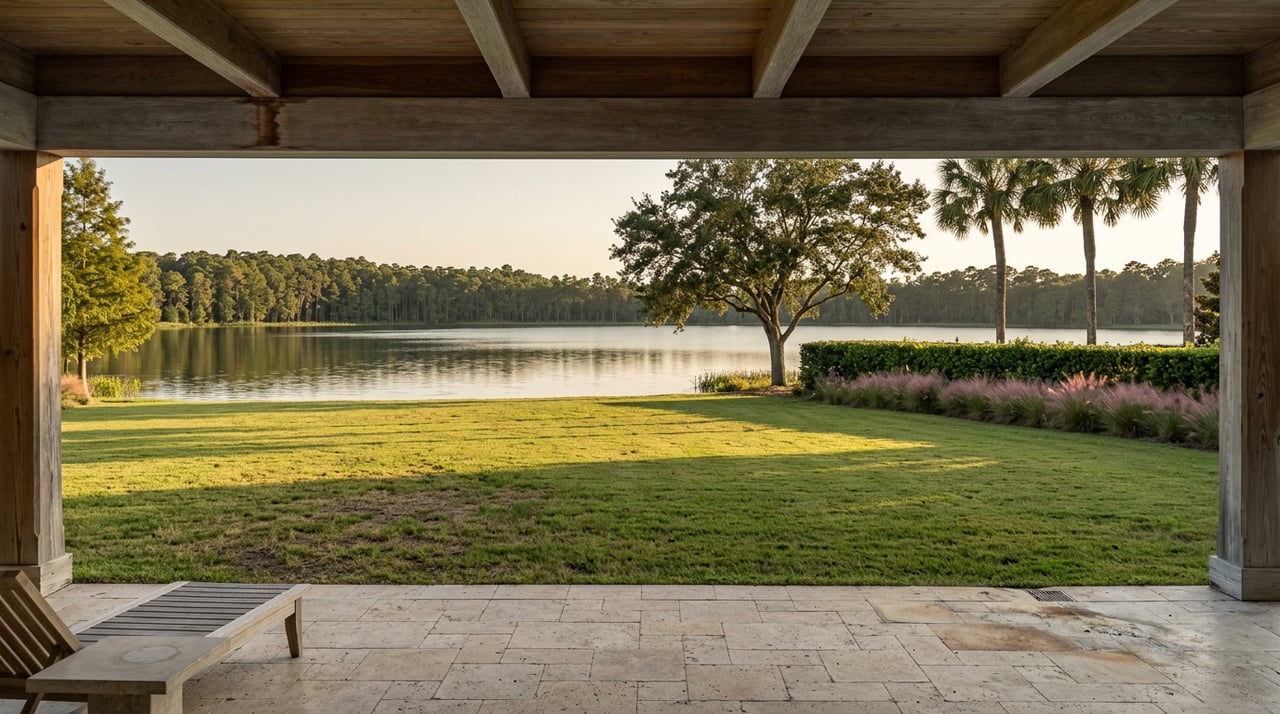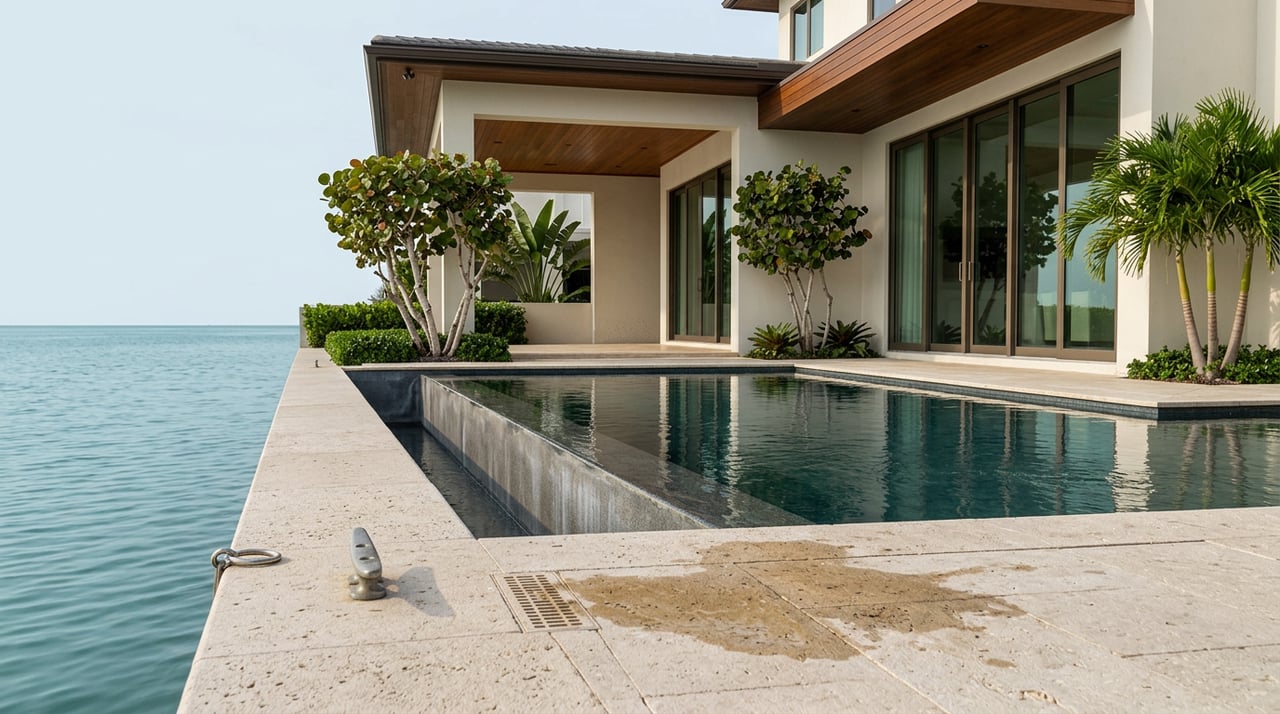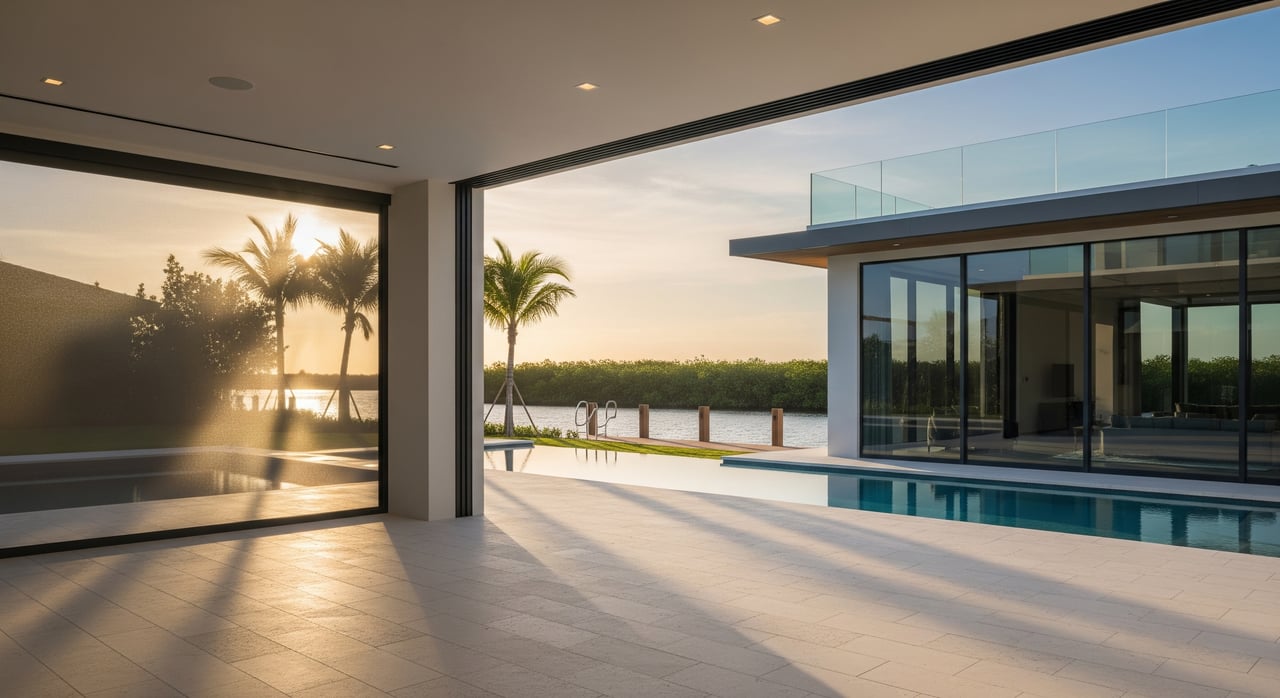
Love your Royal Harbor panorama but feel the afternoon sun turn your great room into a greenhouse? In Naples’ hot, humid climate, west and south exposures can flood your space with heat and glare just when you want to enjoy the view. You want cooler interiors without sacrificing that sparkling bayfront backdrop. In this guide, you’ll learn how to pair the right glass and smart shading so you keep the panorama, reduce AC strain, and elevate your home’s presentation. Let’s dive in.
Why Royal Harbor views overheat
Royal Harbor homes sit in a hot-humid coastal climate with long summers and strong sun. West-facing windows catch low-angle afternoon light that brings intense heat and glare. South-facing glazing gets high solar load through midday, and east-facing walls see bright morning sun.
Salt air and humidity also influence what you choose. Coastal exposure can corrode standard hardware and fabrics, so materials must be rated for marine conditions. Local code and HOA guidelines can affect window systems and visible exterior shading, so confirm requirements early.
What to measure in glass
Understanding a few key metrics helps you compare options with confidence.
- Visible Light Transmittance (VLT): Higher VLT means a clearer view and more daylight.
- Solar Heat Gain Coefficient (SHGC): Lower SHGC reduces how much solar heat gets inside.
- U-factor: Lower U means better insulation. In our climate, SHGC reduction usually matters more than small U-factor differences.
- Low-E coatings: Spectrally selective coatings cut infrared and some UV while keeping high VLT.
- NFRC ratings: Independent labels that report U-factor, SHGC, and VLT so you can compare products apples to apples.
Best glass for bayfront panoramas
If you want a cooler room and a crisp view, prioritize glass that lowers heat while keeping view clarity.
- Choose spectrally selective low-E double glazing. It reduces SHGC while keeping VLT high for clean, natural light.
- Consider low-iron glass for truer color and less green tint over water.
- Use laminated glass for safety and UV blocking. Interlayers can be tuned for sound or solar control.
- Argon gas fill is a plus for insulation, though SHGC remains the main lever for cooling here.
- Avoid heavy tints and mirror-like reflective coatings that darken or distort views and can create unwanted reflections.
Tip: Compare NFRC labels side by side. Look for low SHGC with VLT high enough to preserve clarity, often above 50 to 60 percent.
Exterior shading that protects views
Exterior shading stops heat before it enters the glass. It is the most effective way to cut solar gain while keeping control over when and how you block the sun.
- Fixed overhangs and deep eaves: Highly effective on south exposures during peak sun.
- Vertical fins or side wings: Great for low-angle morning or evening sun on east and west walls, and to temper glare bouncing off the water.
- Exterior roller or solar screens: Intercept heat before it hits glass. For a good balance of view and performance, fabrics with about 10 to 14 percent openness often work well. Ten percent is a common sweet spot when preserving views matters.
- Operable screens or louvers: Deploy for peak sun, retract to restore full panorama.
- Retractable awnings or pergolas with adjustable slats: Flexible shade with minimal visual impact when retracted.
- Glass canopies or extended balconies: Can shade upper glass while keeping sightlines open if proportioned correctly.
Pick shading by orientation
- West-facing sunset frames: Favor vertical fins and motorized exterior screens for low-angle afternoon sun.
- South-facing walls: Use overhangs and eaves for midday control.
- East-facing glass: Plan for morning glare with side fins or exterior screens.
Interior shades for comfort and privacy
Interior shading is excellent for glare control and day-to-night flexibility, though it is less effective at reducing heat load than exterior systems.
- Roller shades with solar fabrics: Choose 10 to 14 percent openness to reduce glare while maintaining a view.
- Cellular shades: Good for insulation and privacy but can interrupt view continuity.
- Sheer shades or double roller systems: Layered control for daytime filtering and nighttime privacy.
- Motorized systems: Timers and sensors help ensure consistent use, especially for tall or hard-to-reach windows.
Design details that keep sightlines
Small details can dramatically improve how your view reads from inside.
- Slim, thermally broken aluminum frames with coastal treatments keep lines clean and views wide while resisting corrosion.
- Recessed glazing under an overhang shades glass and maintains a refined profile.
- Continuous glass balustrades at terraces protect sightlines. Coordinate weatherproofing and code compliance.
- Low-iron glass and anti-reflective coatings can heighten clarity and color fidelity, though coatings add cost and need careful handling.
Balancing daylight, glare, and comfort
The goal is to reduce heat and glare without dimming your panorama.
- Target high VLT with a low SHGC using spectrally selective low-E glass.
- Add exterior shading to block peak sun at the source.
- Use interior solar shades to fine-tune glare for screens and art while keeping the view.
- Consider strategies like light shelves or shaded clerestories to bring in soft daylight away from eye level.
Codes, permits, and HOA checks
Before you specify glass or shading, verify the following:
- Florida Building Code requirements for wind-borne debris regions may call for impact-rated glazing or approved shuttering.
- Collier County permitting and Royal Harbor HOA rules may limit visible exterior changes, such as motorized screens or awnings.
Confirm impact requirements, product approvals, and HOA review timelines early to avoid redesigns.
Coastal durability and maintenance
Bayfront air is beautiful and demanding. Choose products built for it.
- Hardware and frames: Use stainless or marine-grade hardware and powder-coated or anodized aluminum with coastal finishes.
- Fabrics and meshes: Solution-dyed acrylics and PVC-coated fiberglass hold up better in salty, humid conditions.
- Motors and housings: Specify units rated for coastal exposure, with protective housings where needed.
- Care plan: Rinse and clean exterior screens and glass more often to remove salt and organic buildup. Follow manufacturer instructions for coated glass.
Cost, comfort, and value
Exterior screens and spectrally selective glazing can materially reduce solar heat gain, which helps your AC work less. Windows, doors, and skylights account for a notable share of residential heating and cooling energy, so better SHGC control and reduced air leakage can improve comfort and operating costs. Beyond energy, the biggest value driver in Royal Harbor is the view. Thoughtful glass and shading that preserve clarity often enhance market appeal in bayfront homes.
Your quick decision checklist
Use this streamlined path to a cooler view:
- Map exposures: Note which rooms face west, south, and east.
- Verify code and HOA: Confirm impact glazing needs and any rules on exterior shading.
- Compare NFRC labels: Aim for low SHGC with high VLT using spectrally selective low-E glass.
- Prioritize exterior shade: Plan overhangs for south, vertical fins or motorized screens for west, and screens or fins for east.
- Preserve sightlines: Select low-iron glass and slim, corrosion-resistant frames. Recess glazing where possible.
- Choose coastal-rated materials: Fabrics, hardware, motors, and finishes should be designed for salt air.
- Plan maintenance: Make screens and motors accessible for cleaning and service.
- Engage experienced pros: A glazing specialist or architect familiar with Florida coastal sun angles can size and place shading for your exact site.
Ready to make your bayfront rooms cooler and calmer without losing the sunset? With the right glass and shade mix, you can enjoy the view all day and showcase your home with confidence.
If you would like tailored guidance and introductions to vetted local specialists, reach out. You will get design-aware advice that aligns with Royal Harbor’s standards and the way you live. Connect with Unknown Company to start a conversation today.
FAQs
What glass specs work best for Royal Harbor bayfront windows?
- Look for spectrally selective low-E double glazing with a low SHGC and high VLT, ideally paired with low-iron glass and laminated interlayers for UV protection and safety.
How do exterior screens compare to interior shades for cooling?
- Exterior screens intercept sun before it heats the glass, giving stronger heat reduction, while interior shades excel at glare control but are less effective at lowering solar heat gain.
What mesh openness keeps the view while cutting glare?
- A solar fabric with about 10 to 14 percent openness usually balances clarity with heat and glare reduction, with 10 percent a common sweet spot for view preservation.
Are vertical fins useful for west-facing sunset windows?
- Yes. Vertical fins or motorized exterior screens help block low-angle afternoon sun from the west without permanently interrupting the panorama.
What should I check with HOA and permitting before I buy?
- Confirm impact-glazing requirements under the Florida Building Code, and review HOA rules on visible exterior elements like screens, awnings, or louvers before ordering.